The Rise of Motorisation: Why the Trade Should Pay Attention
From smarter homes and safer installations to higher-value sales opportunities, motorisation is rapidly moving from premium add-on to mainstream expectation.
There was a time when motorised blinds were viewed very much as a luxury add-on, reserved for premium homes, specialist projects or commercial spaces with generous budgets. For many installers, motorisation sat firmly in the category of something nice to offer occasionally rather than something worth discussing on every suitable quote. That mindset is changing quickly.
Today, motorisation is about far more than luxury. Increasingly, it is being driven by practicality, convenience, safety and changing customer expectations. As homeowners become more accustomed to smart technology in everyday life, from app-controlled heating and lighting to voice assistants and security systems, they are also becoming more receptive to smarter ways of managing light, privacy and comfort within the home.
For the trade, this presents a genuine opportunity. Installers and retailers who confidently introduce motorisation as part of the conversation are often better positioned to increase average order values, improve margins and offer more complete, future-ready shading solutions.
Changing Customer Expectations
One of the biggest shifts in recent years has been customer familiarity with connected technology. The average homeowner is far more comfortable with automation than they were even five years ago. While most customers will not walk into a showroom specifically asking for motorised blinds, many respond positively once the option is explained properly. In many cases, the issue is not lack of demand but lack of awareness. If motorisation is never mentioned, customers may never realise how accessible and practical it has become.
This shift is especially noticeable in homes where customers are already investing in connected products. Once people become used to controlling lighting, heating and security through apps or voice control, manually adjusting every blind in the house can start to feel surprisingly outdated.
Solving Real-World Problems
This is where the conversation becomes far more practical than simply talking about smart features. The strongest sales conversations rarely begin with technology. They begin with solving problems.
Large windows, bifold doors and feature glazing can be awkward to operate manually. Roof lanterns, skylights and tall stairwell windows may be difficult or impossible to reach without additional equipment. Even in standard living spaces, adjusting multiple blinds throughout the day can quickly become inconvenient.
When customers begin to picture controlling several blinds at once with a single press of a button, or scheduling them to open and close automatically throughout the day, the value of motorisation becomes much easier to appreciate. It stops feeling like a luxury and starts feeling like a sensible solution.
It is also no longer limited to the applications people traditionally associate with motorisation. Across the Tropical range, motorised options are available for Roller and Vision blinds, Perfect Fit® Next Generation Roller and Vision, Vertical blinds and a wide selection of Pleated blinds. This includes solutions for more specialist applications such as tensioned, top-down/bottom-up, Day & Night, triangular and sloping blinds.
A Valuable Upsell for the Trade
From a commercial perspective, motorisation deserves serious attention. It creates a clear upsell opportunity while helping move the sales conversation away from pure price comparison.
Premium products naturally tend to support stronger margins, but perhaps more importantly, they allow installers to sell based on convenience, performance and overall customer experience rather than simply competing on cost alone.
Motorisation is especially worth discussing on projects involving large expanses of glazing, bifold doors, conservatories, roof systems or any hard-to-reach window. It also makes strong commercial sense in offices, hospitality environments and other commercial settings where grouped control improves efficiency and convenience.
Often, the conversation can begin with something very simple: “Have you considered motorisation for these?” That single question can completely change the direction of a quote.
Safety and Clean Design
Safety is another important factor that should not be overlooked. Child safety remains a key consideration across the industry, and while compliant safety devices for cords and chains remain essential, motorised blinds offer a naturally cordless solution.
For family homes, schools and childcare environments, this provides both practical and emotional reassurance. Removing cords and chains not only helps improve safety but also creates a cleaner and more refined finish.
This visual simplicity has become increasingly attractive as interior design trends continue to favour uncluttered, minimal spaces. Without visible operating mechanisms, blinds feel more integrated with the architecture and overall interior design, delivering a more premium appearance.
Smart Control Is Becoming Standard
One of the biggest developments in recent years has not simply been the rise of motorised blinds, but the way they integrate into wider smart home ecosystems.
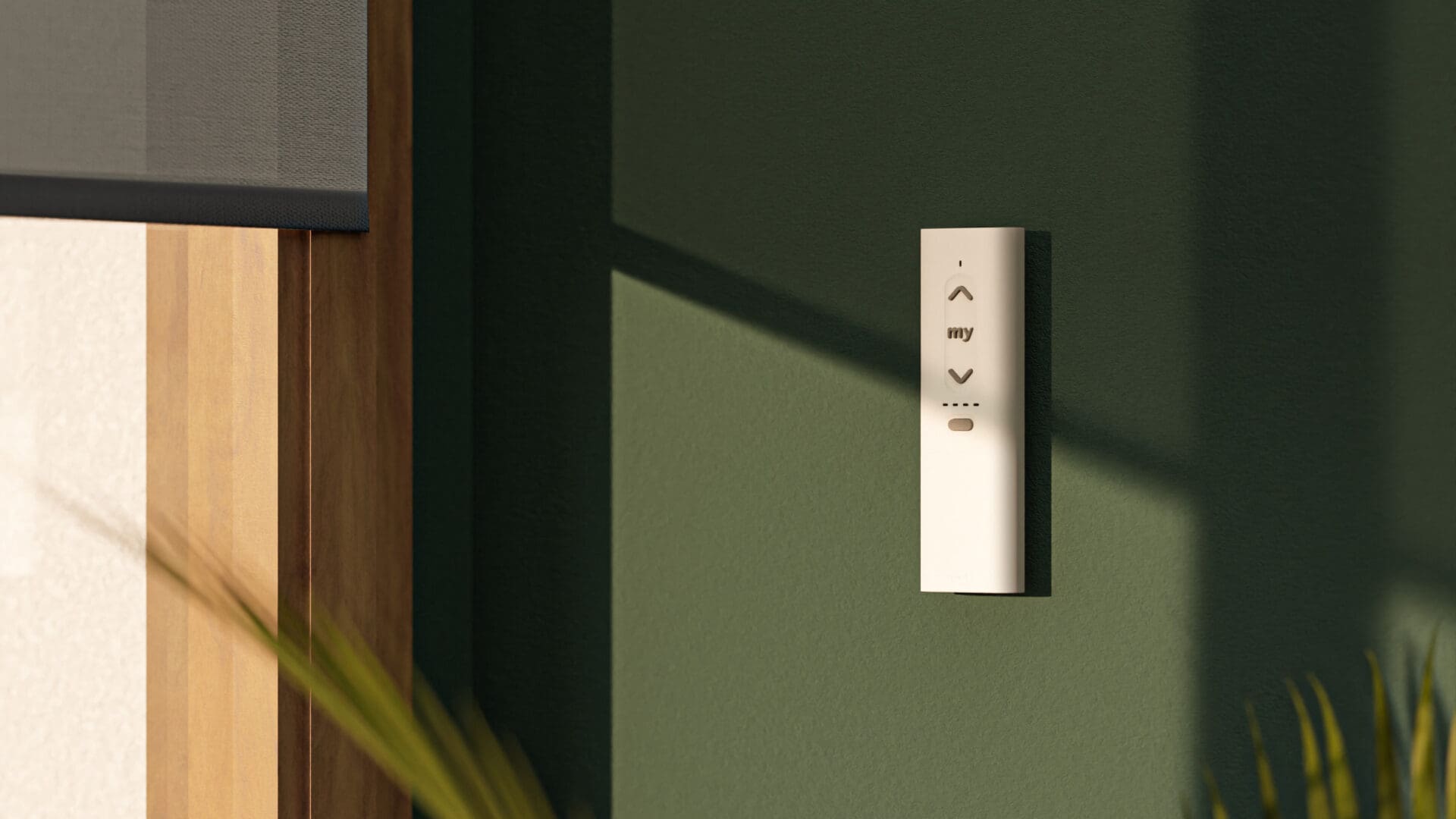
Modern motorisation gives customers far more flexibility in how they interact with their shading. Depending on the system, blinds can be operated individually or grouped together using handheld remotes, wireless wall switches, smartphone apps, voice assistants or automated schedules.
For customers, this means greater convenience and control. Rather than manually adjusting each blind throughout the day, shading can respond automatically to changing light levels, routines or occupancy, creating a more seamless living or working environment.
The benefits extend beyond convenience alone. Intelligent shading can help manage solar gain during warmer periods, reducing overheating and improving comfort in both residential and commercial spaces. As the industry continues to focus on energy efficiency and passive cooling, automated shading is becoming an increasingly important part of the wider conversation.
In practical terms, smart control allows blinds to do more than simply open and close. They become an active part of how a building manages light, heat and privacy throughout the day.
More Choice for the Trade
There is no single motorisation system that will suit every blind or every installation, which is why choice matters.
At Tropical, we offer motorised solutions from Somfy, Louvolite, Cruze and Stelor, giving our trade partners access to different options across a wide range of blind styles, applications and project requirements.
That breadth is important. Motorisation is no longer simply a case of adding a remote-controlled motor to a Roller blind. Depending on the product and application, there are rechargeable lithium battery motors, external battery options and hard-wired solutions, as well as different approaches to control and smart home connectivity. Tropical’s current offering also includes systems using technologies such as Zigbee and Matter & Thread.
This gives installers much more flexibility when discussing motorisation with customers and means the solution can be chosen around the blind, the window and how the customer wants to use it, rather than trying to make one system fit every project.
Choosing the Right Motorisation Setup
One of the strengths of modern motorisation is its flexibility, with solutions available to suit a wide range of installations and project requirements.
Battery-powered systems have become an excellent option for retrofit projects or installations where mains power is not easily available. With rechargeable batteries, wire-free installation and minimal disruption during fitting, they offer a practical solution for many residential and light commercial applications.
Motorisation does not necessarily mean a complicated installation either. Perfect Fit® Next Generation Roller and Vision blinds, for example, can be specified with rechargeable motorisation, providing powered operation without the need for a conventional hard-wired installation.
Mains-powered systems, meanwhile, remain an option for larger blinds and high-use environments where continuous performance is important. Depending on the blind and motor selected, hard-wired solutions are available alongside the growing choice of rechargeable systems.
Choosing the right setup ultimately depends on the scale of the project, the size and style of the blind and, importantly, how the customer intends to use it.
Quiet Performance Matters
Performance matters in ways customers do not always consider immediately. Motor noise, for example, is something people only notice when it becomes intrusive.
That is why quiet operation is such an important part of premium motorisation. Smooth starts, controlled stops and precise positioning all contribute to a better user experience, particularly in bedrooms, living spaces, offices and hospitality settings where acoustic comfort matters just as much as visual comfort.
When a motorised blind moves quietly and effortlessly, it reinforces the sense of quality the customer expects from a premium product.
Looking Ahead
Motorisation is following a familiar pattern seen across many categories of smart technology. Features once viewed as premium extras gradually become expected by the mainstream market. We have seen this happen with smart lighting, connected heating and app-based home security, and window shading is moving in the same direction.
The installers who become confident discussing motorisation now will be in a much stronger position as customer expectations continue to evolve. Not every customer will choose it, of course, but more customers than ever are open to the conversation when the benefits are presented clearly.
At Tropical, we are seeing growing interest in motorised solutions across both residential and commercial projects, particularly where convenience, safety and premium finishes sit high on the customer’s list of priorities.
Motorisation should no longer be viewed as a niche extra reserved for luxury projects. From a trade perspective, it represents a practical way to increase value, improve customer experience and future-proof your offering. Ultimately, the opportunity is not simply about selling a motor. It is about offering smarter, more responsive shading solutions that better reflect how people live and work today.