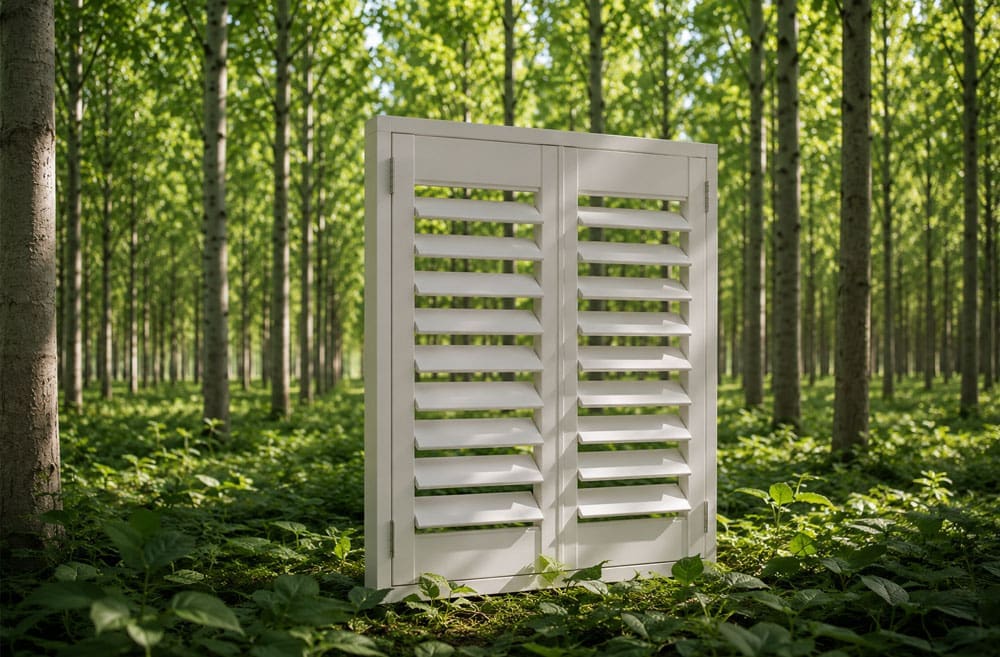
Sustainability That Sells: Helping Customers Understand the Value of Real Wood Shutters
Sustainability has become one of the most talked about subjects in the interiors industry, but for the trade, the conversation is often far more practical than the headlines suggest. Customers are no longer choosing products based on appearance alone. More people are asking where materials come from, how long products are expected to last, and whether they are investing in something designed for the long term rather than replacing it a few years later.
For retailers and installers, that shift creates an opportunity to have better conversations about quality, longevity and value.
In the shutter industry, sustainability is not simply about choosing one material over another. It is about selecting products that are properly suited to their environment, manufactured to perform consistently and designed to remain stable and reliable long after installation. In many cases, the most sustainable product is simply the one that does not need replacing prematurely.
That understanding begins with the materials themselves, but it certainly does not end there.
Why Material Choice Still Matters
Every experienced fitter has seen the difference material quality can make over time. Some products continue to perform well years after installation, while others quickly begin to show signs of movement, discolouration or wear. Customers may not always understand the technical reasons behind those issues, but they certainly notice the results.
Shutters are not short-term decorative products. Once installed, they become part of the room itself. They are opened and closed every day, exposed to changing temperatures, moisture and sunlight, and expected to continue looking good while doing so.
That is why selecting the correct material for the application matters so much.
Living rooms, bay windows and large glazed openings place different demands on a shutter compared with bathrooms, kitchens or utility spaces. Good specification is not about forcing one material into every situation. It is about understanding where certain products excel and ensuring the customer receives a solution built for the environment it will live in.
Most experienced fitters have encountered lower-cost products that initially look competitive on price but become far less attractive once issues begin appearing after installation. A warped panel, movement within the frame or a finish that begins to deteriorate earlier than expected quickly turns a “cheap” product into an expensive problem once return visits, replacement parts and lost labour time are factored in.
That reality matters to installers because every completed job becomes part of their reputation.
The Lasting Appeal of Hardwood Shutters
As the UK’s largest hardwood shutter trade supplier, we continue to see strong demand for real wood shutters from customers looking for a more natural and premium finish within the home.
There is an authenticity to real wood that customers instinctively respond to. Grain, texture and depth of finish all contribute to the appearance, but performance matters just as much as aesthetics. A well-manufactured hardwood shutter should feel solid, stable and built for long-term use.
Our Austin range is manufactured from Paulownia hardwood, a fast-growing timber that reaches maturity in around eight to ten years and regrows after harvesting. Its lightweight structure makes it particularly well suited to shutter manufacturing, especially across larger openings where panel stability and handling become increasingly important during installation.
For installers, reduced weight can make a genuine difference on site. Larger panels are easier to manoeuvre, easier to align and more manageable during fitting, particularly on bay windows, upstairs installations and wider glazed areas where handling heavier materials can become more challenging. Less strain during installation also reduces the risk of accidental damage while helping fitters work more efficiently on site.
Customers may see the finished shutter, but fitters experience everything that happens before that point. Ease of handling, consistency between panels and confidence in the product all influence the quality of the final installation.
Sustainability also extends beyond the raw material itself. Long-term performance matters. A shutter that continues to operate properly and maintain its finish over many years naturally reduces replacement cycles, unnecessary waste and the hidden costs associated with poorly performing products.
Sustainability Starts Long Before Installation
Much of the sustainability conversation focuses on finished products, but long-term performance is heavily influenced by the manufacturing process behind them.
At Tropical, our shutter components are engineered using techniques such as block lamination and finger jointing to improve structural stability while reducing natural imperfections within the timber. Careful kiln drying and moisture conditioning also help minimise movement once the shutter is installed within the home.
Tropical works closely with dedicated manufacturing partners located in close proximity to the Paulownia forests themselves. Beyond supporting efficient material sourcing, this also allows greater familiarity with the timber, tighter quality control and a more consistent manufacturing process from raw material through to finished shutter.
That consistency matters. Especially for installers relying on stable panel construction, reliable finishes and repeatable quality across every order.
These are not simply manufacturing details hidden behind the scenes. They directly influence how the product performs years later.
Stability, finish consistency and durability all contribute to longevity, and longevity remains one of the most important sustainability factors in any interior product. A shutter that continues performing properly for years is ultimately far more sustainable than one that requires premature replacement or remedial work.
Finishing technology also plays an important role. Our PureCoat™ paint system was developed to provide durable, consistent finishes while supporting a more efficient manufacturing process with reduced material waste. Combined with detailed inspection processes throughout production, the result is a product built with long-term reliability in mind.
Consistency matters just as much as appearance. Installers need confidence that finishes, panel construction and sizing remain reliable across every order, particularly when working on larger projects or repeat installations where accuracy and consistency directly affect fitting time and customer satisfaction.
Sustainability Is Also About Suitability
While hardwood shutters remain a popular choice, modern PVC and composite shutters also have an important role within the market.
Products such as our Dulwich and Mayfair ranges are particularly well suited to moisture-prone environments including bathrooms, kitchens and utility areas where long-term resistance to humidity and temperature changes becomes especially important.
Again, sustainability comes back to choosing the correct product for the environment. A shutter that is properly suited to the room is far less likely to experience issues that lead to replacement, callbacks or unnecessary waste later on.
This is where sustainability becomes more practical than promotional. It is not about declaring one material universally better than another. It is about understanding performance, application and lifespan.
Why Reliability Matters to the Trade
From a trade perspective, sustainability also has a practical side that is rarely discussed often enough. Products that remain stable, install consistently and reduce the likelihood of remedial work help minimise waste in every sense, including replacement materials, additional transport, lost labour time and unnecessary site revisits.
Fitters are rarely judged purely on the day of installation. They are judged months and years later when the product is still expected to look good and operate properly. Reliability becomes part of the installer’s reputation long after the tools have been packed away.
That is why experienced trade professionals often look beyond headline pricing alone. Long-term consistency, product stability and confidence in the finished installation all carry real value.
Helping Customers Understand Long-Term Value
The trade continues to operate within a competitive market where cheaper alternatives will always exist, but experienced retailers and installers understand that the true cost of a product is rarely measured at the point of purchase alone.
Customers increasingly appreciate conversations around durability, material quality and long-term performance, particularly when those conversations are explained clearly and honestly. In many cases, they are not simply looking for the cheapest solution available. They are looking for reassurance that they are investing in something designed to last. That changes the conversation entirely.
Rather than focusing purely on upfront cost, the discussion becomes centred around stability, finish quality, suitability and longevity. Those are the areas where better manufactured shutters continue to separate themselves over time.
Built for the Long Term
At Tropical, we believe sustainability and product performance should work together naturally. Whether it is responsibly sourced hardwood shutters designed for premium living spaces or durable PVC ranges developed for demanding environments, the principle remains the same.
Supply products the trade can fit with confidence and customers can continue enjoying for years to come.
Because ultimately, sustainability is not just about what a shutter is made from. It is about responsible sourcing, intelligent manufacturing, proper specification and creating products designed to stand the test of time.