Beyond Light Control: The Growing Acoustic Benefits of Modern Shading
The Comfort Conversation Is Evolving
For years, conversations around shutters and blinds have centred on the obvious benefits. Light control, privacy, energy efficiency and style remain the features customers ask about most often, and rightly so. Increasingly, however, another topic is entering the conversation: acoustic comfort.
Whether it’s traffic from a busy road, trains passing nearby, late-night noise from pubs and restaurants or simply the reality of homes being built closer together, unwanted noise has become part of everyday life for many homeowners. At the same time, the way we use our homes has changed. More people work from home, open-plan living remains popular and larger glazed areas continue to feature in both new-builds and renovations. Together, these changes mean we’re more aware of the sounds around us than ever before.
That raises an interesting question for the shading industry. Can shutters and blinds play a role in creating quieter, more comfortable homes? The honest answer is yes, with one important caveat.
Shutters and blinds are not designed to soundproof a room, nor should they be presented as an alternative to acoustic glazing or specialist sound insulation. However, when specified well, they can contribute to improved acoustic comfort by introducing additional layers between the room and the window, reducing sound reflections and helping soften the feel of a space. While the effect is unlikely to be dramatic on its own, it can make a noticeable difference as part of a wider approach to creating a more comfortable home.
Why Modern Homes Can Feel Noisier
The reason this matters comes down to the way modern interiors are designed. Contemporary homes often look fantastic, but they are not always acoustically forgiving. Large windows, tiled floors, polished surfaces, high ceilings and open-plan layouts all create bright, airy spaces that photograph beautifully, but these same features can also reflect and amplify sound.
Hard surfaces such as glass, plaster, tile and stone do very little to absorb sound energy. Instead, they reflect it around the room, increasing reverberation and making everyday noise feel more intrusive.
Windows are particularly important in this conversation. They are often one of the weakest points in a building when it comes to external noise. Sound can travel through the glazing itself, through small gaps around the frame and through air leakage around window seals. Large glazed areas can also reflect sound back into the room, adding to the overall acoustic environment.
A Quieter Home Starts at the Window
This is where modern shading becomes particularly interesting. By introducing additional material between the window and the room, shutters and blinds can help soften sound reflections while contributing to a calmer indoor environment. The aim is not to eliminate noise completely but to take the edge off everyday disturbances and create a space that feels quieter and more relaxing.
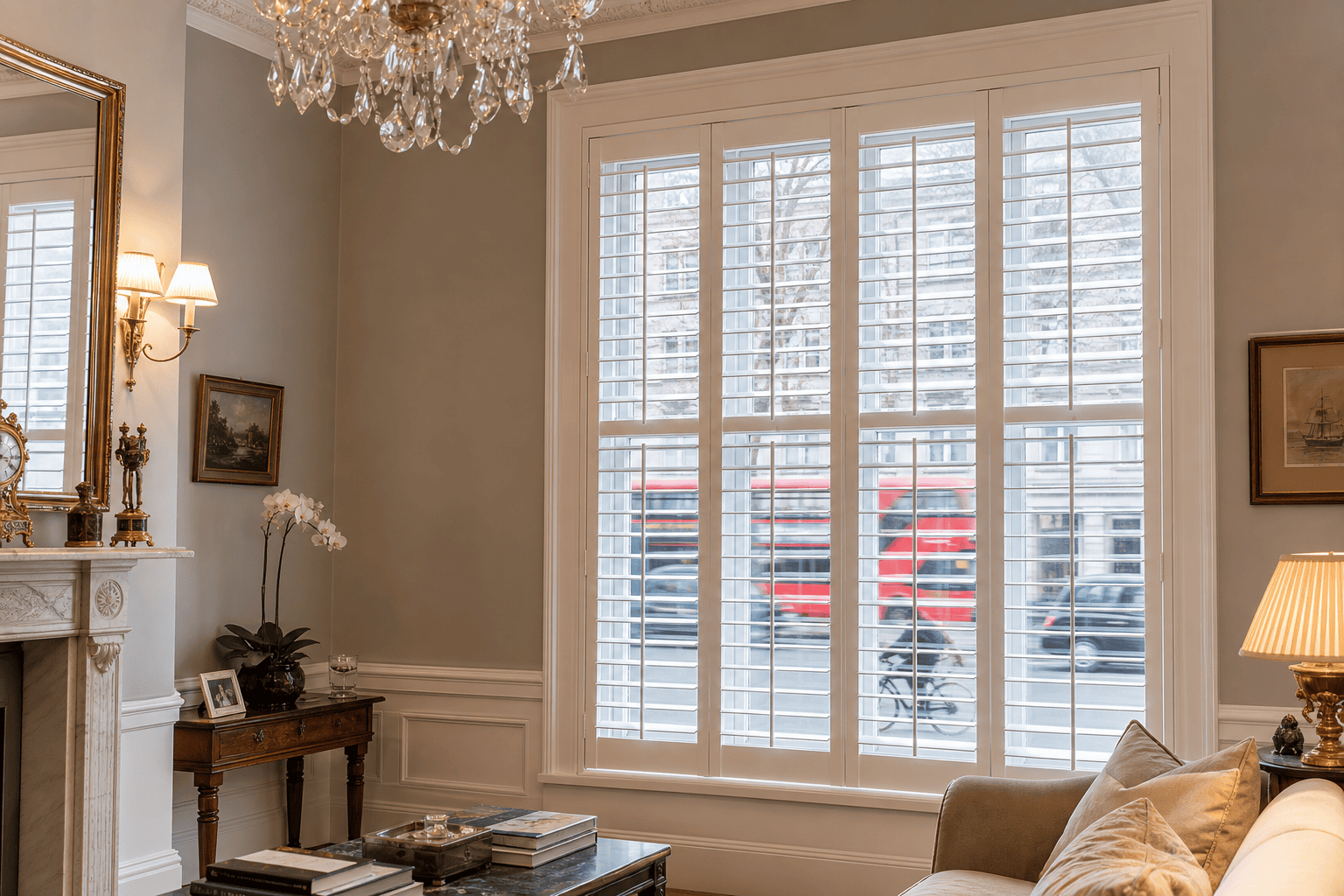
Shutters can be particularly effective in this respect. A well-fitted shutter introduces another physical layer across the window while creating an air gap between the panel and the glass. Together, these elements may help reduce the perception of external noise while also softening sound reflections within the room. Full-height shutters with a close-fitting frame are also likely to provide greater acoustic benefit than more open configurations simply because they create a more complete barrier across the glazing.
Honeycomb or cellular blinds offer another interesting example. Their distinctive air-trapping structure is already recognised for helping improve thermal performance, keeping rooms cooler in summer and warmer in winter. That same design may also contribute to acoustic comfort by providing an additional buffer between the window and the room, demonstrating how one product can support multiple aspects of everyday comfort.
Fabric-based products deserve attention too. Roman blinds and heavier fabrics can help absorb sound within a room, particularly in homes with lots of hard surfaces where echo is more noticeable. Likewise, heavier blackout roller blind fabrics may offer greater sound absorption than lighter decorative fabrics, giving installers another opportunity to tailor product recommendations around a customer’s lifestyle as well as their aesthetic preferences.
Where Comfort Matters Most
The acoustic benefits of shading are likely to be most noticeable in homes where external noise is already part of everyday life. Properties on busy roads, near railway lines or close to restaurants, bars and pubs are obvious examples. Homeowners in these locations are often looking for ways to make their living spaces feel calmer without undertaking major building work.
Bedrooms are another area where acoustic comfort can make a real difference, particularly for shift workers or families with young children. Home offices are equally important. As hybrid working continues, people are increasingly aware of how background noise affects concentration, productivity and even the quality of video calls.
On a lighter note, living next door to a pub during World Cup season has been a timely reminder that sometimes comfort isn’t just about controlling the light coming through the window. It’s also about creating a welcome sense of separation from everything happening outside.
Questions Worth Asking
This also presents an opportunity for installers. During a survey, it’s worth looking beyond the window itself and considering how the customer uses the room.
Is the property on a busy road? Do they regularly work from home? Are they a shift worker? Is the room particularly echoey because of hard flooring and open-plan living?
These aren’t questions traditionally associated with window shading, but they can often lead to more meaningful conversations. They also help position shutters and blinds as part of a wider comfort solution rather than simply a decorative finishing touch.
More Than Light Control
Customers are increasingly thinking about comfort in broader terms. A few years ago, many conversations centred on appearance. Then energy efficiency became a major consideration. More recently, reducing glare and managing solar heat gain have become increasingly important. Acoustic comfort feels like the next natural step in that evolution.
Installers who understand these wider performance benefits are better placed to advise customers and recommend products that genuinely improve everyday living. Instead of focusing solely on colour, finish and price, the conversation becomes about creating homes that feel better to live in. Because comfort is rarely defined by one thing alone.
It is shaped by temperature, light, privacy and, increasingly, by sound. As expectations of the modern home continue to evolve, so too does the role of window shading. It is no longer simply about controlling daylight or enhancing privacy. It is about creating spaces that feel cooler, calmer and more comfortable.
For the trade, recognising that shift could be the difference between simply supplying a product and delivering a better living environment for every customer.